

Hi Kate and Hari,
Have you received response from team at Company X yet? I did get email from Mehmet who works in sales department, but he did not have details we need to proceed with plan.
Let me know ASAP if you hear anything.
Thanks,
Roman
Did you find any errors in the above email? If so, what kind of errors?
If you answered that the author did not include articles in his sentences, you are correct!
Articles are little words—“a”, “an”, “the”, and “some”—but they are necessary if you want your writing to be grammatically correct. However, there are times when articles are not necessary.
This can be confusing if English is not your first language. Many languages either don’t have articles, or they are used differently than in English. At TextRanch, we see a lot of extremely well-written academic papers where the only issues are with articles.
So let’s take a closer look at “a”, “an”, “the”, and “some”. You’ll find out when to use each one, and when the correct choice is to use no article at all.
Need Editing and
Proofreading Services?
“A” = One of Many (Before Consonant Sounds)
The article “a” is an indefinite article. We use it before a noun that is singular, countable, and not specific.
- Do you have a pen?
In this sentence, the speaker isn’t asking for a particular pen. They probably just want to write something down. So any pen will do!
Here are some more examples of how “a” is used:
- Max uses a wheelchair to get around.
- Is there a playground in this neighborhood?
- Dora needs to hire a nanny to take care of her children while she works.
What if there’s an adjective before the noun in the sentence? Then the article comes before the adjective.
- We made a tasty stew for dinner last night.
- Steven saw a bright light in the sky.
- Can you help me find a luxury condominium near the beach?
“An” = One of Many (Before Vowel Sounds)
We use “an” in the same way as “a,” except it’s used before vowel sounds (a, e, i, o, u).
- Would you rather have an apple or an orange?
- Dylan is an expert at fixing vintage computers.
- Granite is an example of an igneous rock.
Pay attention to the sound of the word, not the spelling, especially if a word starts with “h” or “u”.
- Your appointment should take about an hour (silent h → vowel sound).
- That’s an ugly shirt (the u is pronounced as “uh”→ vowel sound).
- We have to wear a uniform to school (the u is pronounced the same as “you”→ consonant sound).
- I want to buy a house in this neighborhood (the h is pronounced→ consonant sound).

“Some” = An Unspecified Amount
The article “some” works like a plural version of “a” or “an”. It is used when a noun is uncountable, such as “water” or “information”. It is also used when the amount isn’t specific.
- Mila saw some cats in the alley behind our apartment.
In the above sentence, we don’t know exactly how many cats Mila saw. We just know she saw more than one cat.
- We already have some knowledge about cybersecurity, but it’s insufficient.
- Should we put some carrots in the stew?
- I’ve done some research on clean energy.
- Mr. Patel gave Madison some advice about how to improve her grades.
“The” = Something Specific
Unlike “a”, “an”, and “some”, “the” is a definite article. We use “the” when we’re talking about something specific or something that has already been mentioned. Your reader/listener should know what you are referring to when you use “the”.
To see how this works, let’s go back to our scenario about the cats in the alley and add more details:
- Mila saw some cats in the alley. She tried to see if they had collars or tags, but they ran away from her. So Mila thinks the cats are feral.
Once the noun (in this case, “cats”) is known, it becomes specific. Then we switch from an indefinite article (“a”, “an”, or “some”) to the definite article, “the”.
Here are some additional examples:
- The kitchen has a big table where we prepare our meals.
- When is the CEO coming back from Hong Kong?
- Did you know that the roof was leaking?
- Mom took the car to work, so I had to ride my bike to school.
No Article?
Sometimes, we don’t put any article in front of a noun. This is where many English learners get confused.
So how can you tell when not to use an article? Here are some of the most common cases:
1. Proper Nouns
Names of people, cities, countries, months, holidays, and companies usually don’t need an article.
❌ Are there direct flights to the Dubai?
✅ Are there direct flights to Dubai?
❌ The Frank Sinatra is my mom’s favorite singer.
✅ Frank Sinatra is my mom’s favorite singer.
Note: The above rule does not apply if “the” is part of the proper noun:
- The Rolling Stones are from the United Kingdom.
2. General concepts
This one can be a little tricky. But if you are using a noun as part of a general statement, you don’t include articles. The best way to explain it is to look at some examples:
- Do you like music?
- I do not eat pork because it is against my religion.
- It’s beneficial to read books to your children.
- You should take vitamins every day.
- Dinosaurs do not exist anymore.
- Cell phones usually have rechargeable batteries.
- We need more hospitals in this part of the country.
3. Languages and Academic Subjects
Languages are proper nouns, while subjects are abstract concepts.
❌ Do you speak a Mandarin?
✅ Do you speak Mandarin?
❌ I had a hard time learning the calculus.
✅ I had a hard time learning calculus.
4. Meals and Mealtimes
When a meal is treated as a general concept, no article is needed.
❌ The children in the lower grades eat the lunch at eleven thirty.
✅ The children in the lower grades eat lunch at eleven thirty.
However, if you are referring to a specific meal, you do use an article:
- The dinner we cooked last night was so delicious!
5. Sports
We usually don’t use articles before the names of sports.
❌ On Saturday, I played the golf with my friend, Ann.
✅ On Saturday, I played golf with my friend, Ann.
Note: We do use articles in front of words like “basketball” and “football” if you are referring to the actual ball, but not when you’re referring to the sport in general:
- Run and get the basketball and we’ll shoot some hoops.
- This is where we play basketball.
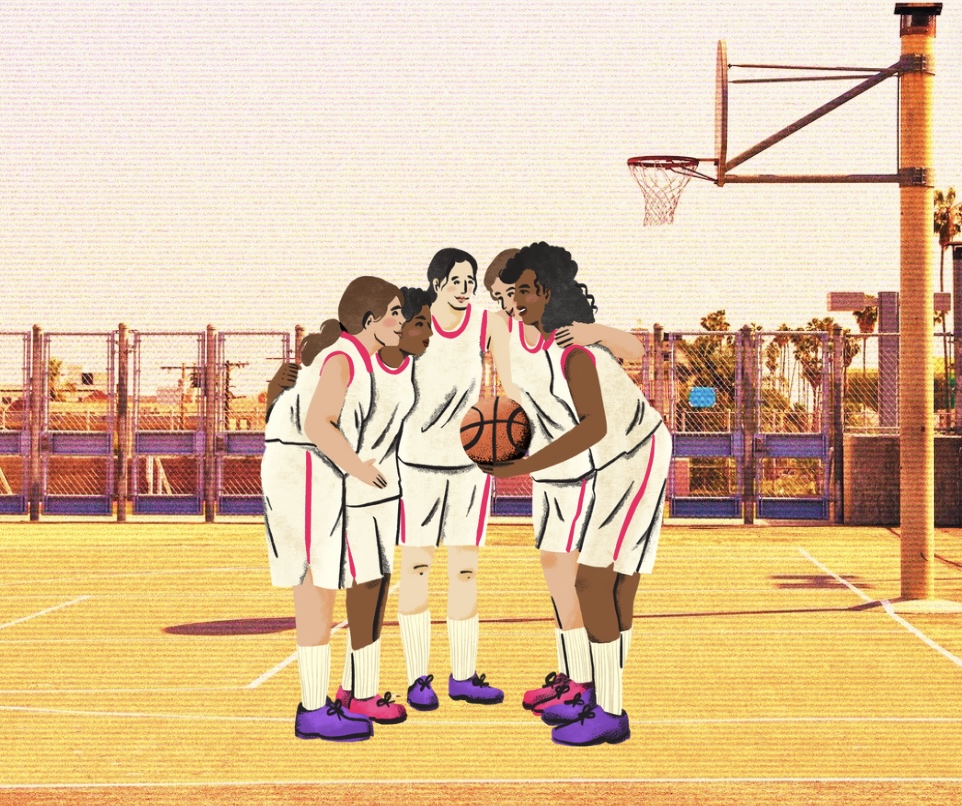
In all of the above cases, make sure that the noun you’re using isn’t part of a longer noun phrase. Take the following sentence as an example:
- The basketball game is scheduled for tomorrow at 7pm.
In the above sentence, “basketball game” is a noun phrase. We are not referring to the sport of basketball in a general sense. Indeed, we use the article “the” because we are writing/talking about a specific basketball game.
Here are a few more examples:
- The calculus exam wasn’t as hard as I thought it would be.
- I heard that Harry Styles is going to be on a music awards show.
- Mona has some Mandarin oranges in her lunchbox.
Final Tip
If you’re not sure which article to use, ask yourself:
- Is it one of many? → a/an
- Is it specific or already known? → the
- Is it an unspecified amount? → some
- Is it a general concept or proper noun? → no article
Need Editing and
Proofreading Services?
If you’re still unsure, you don’t need to guess. Ask one of our TextRanch English experts. Do you just have one sentence for us to check? That’s fine. Did you write a 200-page book? We can check that, too! We will even check AI-generated writing. Just click the blue box below to get started.


Ask an Editor: A New TextRanch Feature!
Proofreading vs. Editing: What’s the Difference?
Human Editors: Why Do You Need One?
How can I improve my understanding of native-English speakers? Part 1